Handmade Leather Bullwhips: The Complete History, Traditional Craftsmanship, and American Western Heritage
A journey through the origins, materials, history, and cultural significance of one of the most recognizable tools of the American frontier.
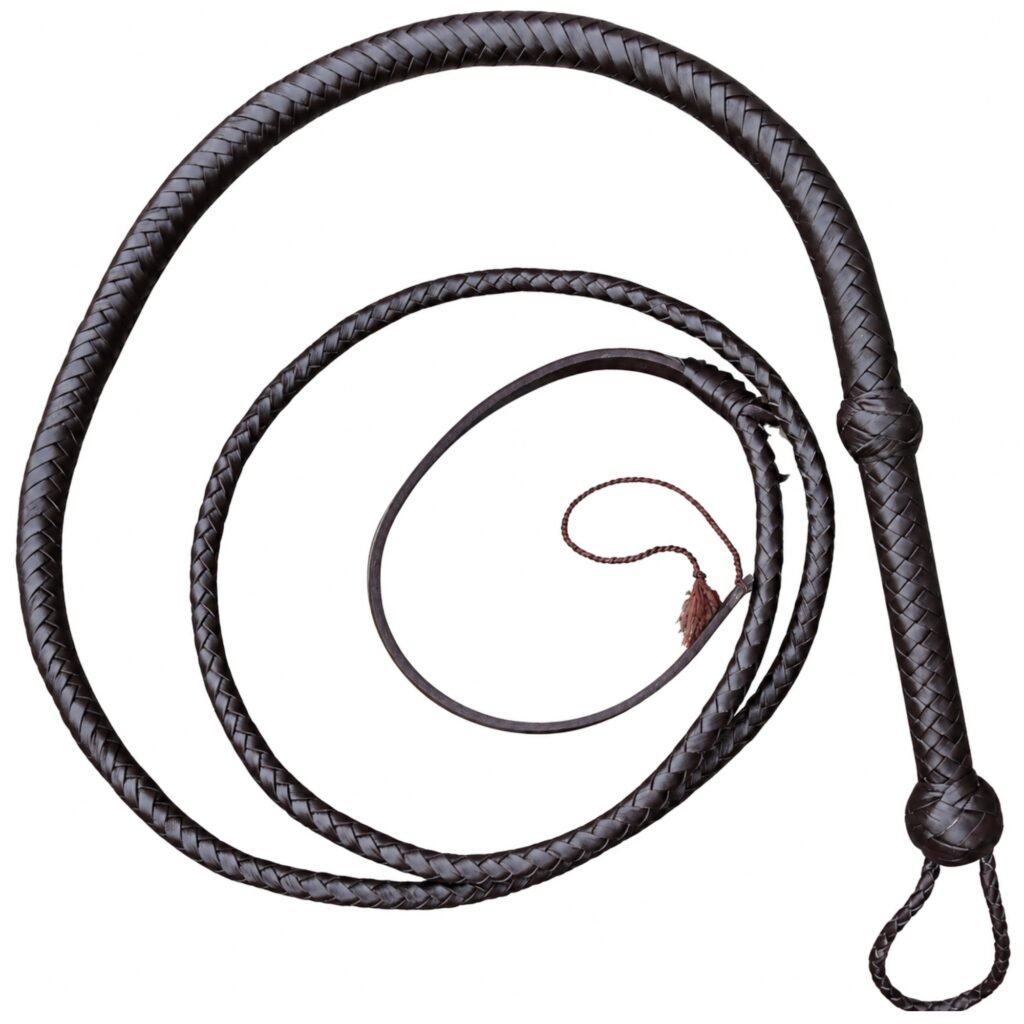
The handmade leather bullwhip has a history that stretches far beyond Western movies and cowboy legends. Long before it became a familiar symbol of adventure and the American frontier, the bullwhip had a practical role in livestock management, overland transportation, and rural life.
Today, traditional leather bullwhips also represent a distinctive part of leatherworking history. Their braided construction reflects techniques associated with generations of craftspeople, while surviving historical examples offer a fascinating look at the materials and tools used in earlier centuries.
But where did the bullwhip come from? When did it become associated with American cowboys? What distinguishes a handmade leather bullwhip from other types of whips?
This article explores those questions and the history behind this traditional craft.
What Is a Handmade Leather Bullwhip?
A bullwhip is a flexible, single-tailed whip historically associated with livestock work. Traditional examples generally feature a handle connected to a long, tapered body, often made with braided leather.
The term handmade leather bullwhip refers to a bullwhip produced through manual leatherworking and braiding rather than an entirely automated manufacturing process.
Its appearance can vary considerably depending on its historical period, geographic origin, materials, and intended purpose.
Although many people associate bullwhips exclusively with cowboys, they also have connections to transportation workers, leather artisans, agricultural communities, and professional performers.
The bullwhip is part of a broader family of historical whips, each with different construction characteristics and cultural associations.
The History of the Bullwhip: Where Did It Begin?
The Early Origins of Whips
Whips existed long before the settlement of the American West.
Different societies developed flexible implements made from leather, fiber, and other available materials for agricultural work, animal management, and other purposes.
Over time, distinct regional designs emerged.
The history of whips is therefore much older than the history of any one modern bullwhip design.
It is important to distinguish between the general history of whips and the development of the particular long, tapered leather bullwhip familiar today.
There is no single historically verified invention date or inventor for the modern bullwhip.
Its development is better understood as part of a long evolution of agricultural equipment and leatherworking traditions.
Bullwhips in 19th-Century America
One of the clearest documented chapters in American bullwhip history comes from the period of overland freight transportation.
During the 1800s, heavy wagons carried merchandise, equipment, and supplies across large parts of the United States.
Before railroads connected many western settlements, animal-drawn wagons played an essential role in transporting goods.
Oxen were especially important because they could pull substantial loads over long distances.
The workers responsible for guiding teams of oxen were often known as bullwhackers.
According to the U.S. National Park Service’s educational material about the Santa Fe Trail, bullwhackers used bullwhips as part of their work with ox teams.
The Santa Fe Trail operated as an important commercial route from 1821 into the railroad era of the late 19th century.
This period provides documented evidence of the bullwhip’s place in American transportation history.
Rather than treating the bullwhip as a movie invention, historical accounts place it within the everyday working environment of freight drivers and frontier communities.
Bullwhips and the American Cowboy Era
The second half of the 19th century brought tremendous changes to the American cattle industry.
Following the Civil War, large cattle drives became a recognizable part of Western history.
According to the National Park Service, the western cattle industry expanded substantially during the mid-1860s, driven by growing demand for beef and the development of transportation routes.
Cowboys, ranchers, and other livestock workers relied on a variety of tools and methods to manage animals across open terrain.
Whips formed part of the broader tradition of animal-handling equipment, although it would be inaccurate to claim that every American cowboy carried or used a bullwhip.
Many popular images of Western life combine historical reality with later fictional portrayals.
The actual working practices of the American West varied considerably depending on location, occupation, and period.
Nevertheless, the braided leather whip gradually became one of the recognizable objects associated with Western heritage.
The Australian Stockwhip and Its Distinct History
American bullwhips are not the only famous examples of traditional braided leather whips.
Australia developed its own prominent whipmaking traditions, particularly those associated with cattle stations and mounted stockmen.
The Australian stockwhip is related to the bullwhip, but the two are not identical designs.
Australian stockwhips typically feature a longer, more distinct handle and a flexible connection between the handle and braided body. Traditional bullwhips more commonly incorporate the handle into the continuous structure of the whip.
The National Museum of Australia documents the important role of horses and stockmen in the country’s rural history.
By the late 19th century, the mounted stockman had become a prominent symbol of Australian national identity.
These regional traditions demonstrate how similar agricultural needs contributed to different forms of leatherworking.
The American bullwhip and Australian stockwhip share historical connections to livestock management, but each has its own design heritage and cultural story.
Understanding Traditional Leather Bullwhip Craftsmanship
Handmade leatherworking is an established craft that includes cutting, shaping, braiding, stitching, and finishing animal hides.
Within whipmaking, braided construction is one of the most recognizable visual features.
Historically, craftsmen developed different styles based on the materials available to them, established regional practices, and the requirements of the finished object.
Why Leather Became an Important Material
Leather has been used for centuries in items such as saddles, harnesses, reins, belts, footwear, and other working equipment.
Its flexibility and ability to be formed into different shapes helped make it useful in many traditional applications.
Historical whipmakers used different types of hides according to local availability and established craft traditions.
Leather is not one uniform material, however.
Its characteristics depend on several factors, including the original hide, tanning method, thickness, and finishing process.
Consequently, two objects described simply as leather whips may differ significantly in texture, appearance, and construction.
The Meaning of Braided and Plaited Leather
A defining feature of many traditional leather bullwhips is their braided exterior.
In leatherworking, plaiting is another term commonly used for braiding.
Descriptions such as 8-plait, 12-plait, and 16-plait refer to the number of strands used in a particular braided arrangement.
The term identifies a construction characteristic, not a universally accepted quality grade.
For historians and collectors, braided patterns can help describe an object’s visual characteristics and construction tradition.
They may also provide useful clues when documenting differences between historic examples.
Traditional Parts of a Bullwhip
Although designs vary, the terminology commonly associated with traditional bullwhips includes:
- Handle: The section associated with the grip, which may be covered in braided leather.
- Thong: The long, flexible main body of the whip.
- Fall: A separate flexible section near the end on many traditional designs.
- Cracker or popper: The terminal component associated with the characteristic cracking sound.
Different historical designs may use different arrangements or terminology.
Museum records are particularly useful for understanding these variations without assuming that every whip has identical construction.
Why Does a Bullwhip Make a Cracking Sound?
One of the most interesting scientific questions surrounding a bullwhip concerns its recognizable sound.
The answer involves physics.
Researchers have shown that the crack is associated with a shock wave created when part of a moving whip reaches supersonic speed.
A 2002 study by Alain Goriely and Tyler McMillen, published in Physical Review Letters, examined the physics of this phenomenon.
The researchers modeled the motion of a whip and studied the relationship between its changing shape and the behavior of waves traveling along it.
Their research helped explain why a whip’s crack is associated with a small sonic boom rather than simply the sound of leather striking another object.
This phenomenon has attracted scientific attention because it illustrates the relationship between motion, wave propagation, and the speed of sound.
Understanding the physics does not make whip handling safe. The high speeds involved are one reason these objects can cause serious injuries.
Handmade Leather Bullwhips in Rodeo and Western Entertainment
As American society changed, traditional Western equipment took on new cultural meanings.
Objects once associated with agricultural work increasingly appeared in entertainment, historical displays, and performances celebrating Western traditions.
Leather whips became part of some rodeo and Wild West performance acts.
The Smithsonian’s National Museum of American History preserves a braided leather whip associated with rodeo performer and trick rider Bernice Dean.
Bernice and Frank Dean toured the performance circuit for decades beginning in the 1930s.
Their appearances included rodeos, stage shows, circuses, and motion pictures.
This museum collection provides direct historical evidence of braided leather whips being associated with professional entertainment during the 20th century.
The transition from practical working equipment to a recognizable performance object is an important chapter in bullwhip history.
The Bullwhip in Hollywood and Popular Culture
For many Americans, the most familiar image of a bullwhip comes from adventure movies.
The Indiana Jones film series helped introduce the object to an international audience.
The Smithsonian Institution preserves a whip made by craftsman David Morgan for production of the film series.
The museum identifies the object as a braided leather whip, approximately dated to 1981.
This artifact illustrates the connection between traditional leather craftsmanship and modern filmmaking.
Movie portrayals often exaggerate what historical equipment could accomplish, and fictional scenes should not be confused with safe or realistic use.
Nevertheless, the bullwhip’s appearance in widely recognized films contributed to its place in popular culture.
It became associated not only with Western history but also with cinematic adventure, costume design, and prop-making traditions.
A More Complete Look at the History of Whips
The history of whips includes chapters that are not celebratory.
Although many whips were developed as agricultural implements, other examples were used to intimidate, punish, and inflict violence.
The Smithsonian’s National Museum of African American History and Culture preserves field whips associated with slavery in the United States.
One braided field whip in its collection dates to the 1850s.
Such artifacts document how similar materials and construction traditions existed in very different historical circumstances.
They also demonstrate why the history of leather whips should not be reduced to romanticized stories about cowboys and adventure films.
Understanding their place in American history means acknowledging agricultural work, craftsmanship, entertainment, and their use in oppression.
Why Traditional Leatherworking Matters Today
Leatherworking is part of a much larger history of skilled manual trades.
Before modern industrial production became widespread, many communities depended on local craftspeople for saddles, harnesses, footwear, and other leather goods.
Knowledge was often passed between experienced workers and apprentices through practical experience.
The surviving objects offer information about how materials were selected, how regional styles developed, and how everyday working equipment was made.
Today, museums, historians, and craft researchers study these items as examples of material culture.
A handmade leather bullwhip can therefore be examined as more than a familiar Western object.
Its construction may reflect an established craft tradition, while its history connects transportation, agriculture, and regional identity.
The historical value of any particular example depends on factors such as age, authenticity, documented provenance, and its connection to identifiable people or events.
Being handmade does not automatically make an object an antique.
Preserving Historical Leather Artifacts
Leather is an organic material that can change over time.
Museums face particular challenges when conserving historic leather objects because environmental conditions can affect their appearance and structural integrity.
The National Park Service and the Canadian Conservation Institute have published professional guidance on preserving leather and skin-based museum collections.
Their recommendations emphasize controlling environmental conditions, limiting unnecessary exposure to light, and avoiding inappropriate treatments.
Historical leather preservation differs from ordinary maintenance of modern leather accessories.
Museum conservators generally favor preventive conservation and careful assessment instead of applying treatments without understanding an artifact’s materials and condition.
This work helps protect the physical evidence of traditional craftsmanship for future researchers and visitors.
Handmade Leather Bullwhips in American Cultural History
The bullwhip’s story connects several distinct areas of American history.
Its association with 19th-century freight drivers recalls an era when wagons and oxen transported goods across long distances.
Its connection to rural work reflects the importance of livestock and agriculture in frontier economies.
Its braided construction belongs to the broader history of leatherworking and skilled manual trades.
Its presence in museums, rodeo collections, and popular entertainment demonstrates how an object can acquire new cultural meanings over time.
At the same time, historical collections documenting violence remind us that these objects have not always been associated with positive purposes.
A complete account includes all these dimensions.
Understanding the handmade leather bullwhip means studying both the artistry of its construction and the complicated history surrounding its use.
Frequently Asked Questions About Handmade Leather Bullwhips
1. When was the leather bullwhip invented?
There is no single reliably established date for the invention of the modern leather bullwhip. Whips existed in different forms for centuries before their documented use in 19th-century American transportation and agricultural work.
2. Were bullwhips used in the American West?
Yes. The U.S. National Park Service documents the use of bullwhips by bullwhackers who guided ox teams along historic freight routes, including the Santa Fe Trail.
3. Did every American cowboy use a bullwhip?
No. The popular image of cowboys carrying bullwhips does not represent every historical ranching practice. Equipment varied by occupation, region, and time period.
4. What does handmade mean in leather craftsmanship?
Handmade generally indicates that important stages of production involve manual work. The precise amount of handwork varies, so the term should be supported by accurate information about the individual object.
5. What is the difference between a bullwhip and an Australian stockwhip?
Both belong to the broader family of whips associated with livestock work. Traditional stockwhips generally have a distinct handle connected to the body by a flexible joint, while the traditional bullwhip more commonly has an integrated handle arrangement.
6. What does 12-plait leather mean?
The term describes a braided arrangement involving 12 strands. It identifies a construction characteristic rather than proving a particular material grade or level of craftsmanship.
7. Are all traditional bullwhips made from the same leather?
No. Historical and contemporary examples vary in their materials, tanning methods, construction, and finish. Material identification should be based on evidence for the individual object.
8. Why does a whip produce such a loud sound?
Published physics research has linked the sound to a small sonic boom generated when a moving section of the whip exceeds the speed of sound.
9. Are handmade leather bullwhips still historically significant?
Yes. Documented examples can help historians understand traditional leatherworking, transportation, livestock-related occupations, and performance culture.
10. Are all old-looking leather bullwhips antiques?
No. Appearance alone cannot establish an object’s age. An antique designation requires historical evidence, and provenance is especially important when evaluating a purportedly historic item.
Final Thoughts: Understanding the Legacy of the Handmade Leather Bullwhip
The handmade leather bullwhip has a complex and fascinating history.
Its story spans traditional animal husbandry, American freight transportation, leatherworking craftsmanship, rodeo entertainment, museum preservation, and Hollywood.
What began as part of a wider family of working implements eventually became a recognizable symbol in Western culture.
Yet its significance extends beyond any single movie, occupation, or historical era.
The real story lies in the people who made these objects, the communities in which they were used, and the historical records that survive today.
Studying those records offers a more complete appreciation of traditional leather craftsmanship while preserving an accurate understanding of the bullwhip’s complicated place in history.
Historical References and Further Reading
- U.S. National Park Service — Santa Fe Trail: Junior Wagon Master
- U.S. National Park Service — Grant-Kohrs Ranch and Western Cattle History
- National Museum of Australia — Australia’s Horse Story
- Smithsonian National Museum of American History — Bernice Dean’s Whip
- Smithsonian National Museum of American History — Indiana Jones Film Whip
- Smithsonian National Museum of African American History and Culture — Historical Field Whip
- Physical Review Letters — Shape of a Cracking Whip (2002)
- Canadian Conservation Institute — Leather, Skin, and Fur Preservation
Prepared as an educational historical article for Artifice Crafts LLC.